
LIVER AND SKIN Lesson Note
This SS3 Biology lesson note covers LIVER AND SKIN for First Term, Week 2.
Learning Objectives
- At the end of the lesson, students should be able to:
- Describe the structure of the liver.
- State the functions of the liver.
- Explain the role of the liver in excretion and homeostasis.
- Mention common liver diseases and their effects.
- Describe the structure of the skin.
- State the functions of the skin.
- Explain the role of the skin in temperature regulation and excretion.
- Mention common skin diseases and ways of caring for the skin.
Lesson Note
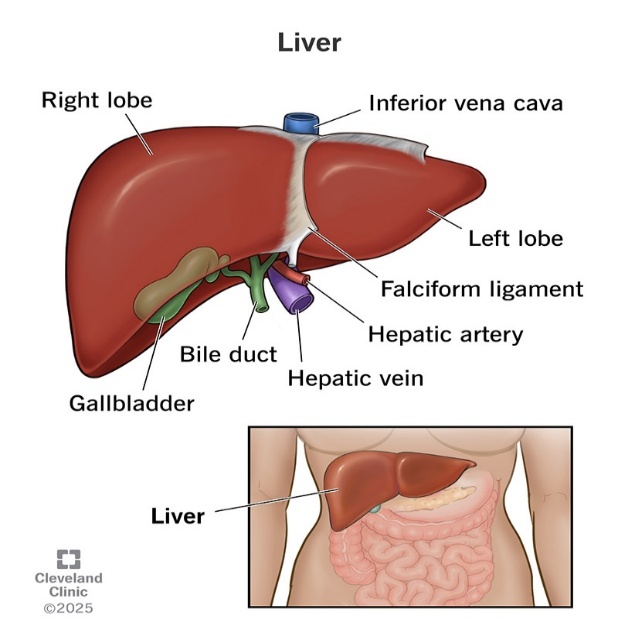
A. THE LIVER
The liver is a large reddish-brown organ located in the upper right side of the abdomen, below the diaphragm.
It is one of the most important organs involved in metabolism, excretion and maintenance of the internal environment.
The liver receives blood from the hepatic artery and the hepatic portal vein and sends processed blood away through the hepatic vein.
STRUCTURE OF THE LIVER
The liver is divided into large lobes and is made up of many microscopic units called lobules.
Each liver lobule contains specialised liver cells called hepatocytes.
IMPORTANT STRUCTURES ASSOCIATED WITH THE LIVER INCLUDE:
Hepatocytes – carry out most liver functions.
Blood sinusoids – spaces through which blood flows between liver cells.
Bile canaliculi – tiny channels that collect bile.
Bile ducts – carry bile away from the liver.
FUNCTIONS OF THE LIVER
The liver performs many important functions.
1. Deamination
When there is excess amino acids are divided into two components: the amino group and carboxyl group.
This process is called deamination.
Ammonia produced during deamination is toxic. The liver converts ammonia into urea, which is transported in the blood to the kidneys for excretion.
Amino acids → Ammonia → Urea
2. Production of Bile
The liver produces bile.
Bile is stored temporarily in the gall bladder and released into the small intestine.
Bile helps for the emulsification of fats.
3. Regulation of Blood Glucose
The liver helps maintain the blood glucose level.
When blood glucose is high, excess glucose can be converted into glycogen and stored in the liver.
When blood glucose becomes low, glycogen can be broken down and glucose released into the blood.
4. Detoxification
The liver helps filter and detoxifies harmful substances, including drugs and toxins, from the blood.
It processes substances such as certain drugs and alcohol so that they can be eliminated more safely.
5. Storage
The liver stores:
*Glycogen
*Iron
*Vitamins such as A, D and B12
These substances can be released when needed.
6. Metabolism
Metabolism is the processes nutrients from the digestive system, converting them into energy, storing glycogen, and regulating blood sugar levels.
The liver is involved in the metabolism of:
*Carbohydrates
*Proteins
*Fats
It helps convert nutrients into forms that the body can use.
7. Breakdown of Old Red Blood Cells
The liver, together with the spleen and other tissues, helps process substances produced when old red blood cells are broken down.
The hemoglobin breakdown products are processed and some are eventually excreted in bile.
LIVER AS AN EXCRETORY ORGAN
The liver plays an important role in excretion.
It:
Converts toxic ammonia into urea.
Processes waste products from the breakdown of haemoglobin.
Helps remove certain drugs and toxic substances from the blood.
Excretes some waste
products through bile.
COMMON LIVER DISEASES
1. Hepatitis
Hepatitis is inflammation of the liver. It may be caused by viruses or toxic substances like drugs and poison.
Cirrhosis
Cirrhosis is severe, long-term damage to the liver in which healthy liver tissue is replaced by scar tissue.
3. Fatty Liver Disease
This occurs when excessive fat accumulates in the liver.
4. Liver Cancer
Abnormal cells may grow uncontrollably in the liver and form cancer.
5. Gall Stones
These are hard objects which are formed in the bile duct and block the passage of the bile.
EFFECTS OF LIVER DISEASES
Liver diseases may cause:
1. Weakness and tiredness.
2. Loss of appetite.
3. Abdominal discomfort.
4. Jaundice.
5. Poor metabolism.
6. Accumulation of harmful substances in the blood.
7. In severe cases, liver failure.
REMEDIES
A long best rest
Low fat controlled diet
Avoiding drinking alcohol
Removing the cause of the disease
Liver transplant can be done in progressive liver cirrhosis and cancer of the liver.
B. THE SKIN
The skin is a thin layer of tissue forming the natural outer covering of the body of a person or an animal.
It is the largest organ of the human body and forms a protective barrier between the body and the external environment.
The skin is also an important organ of excretion, sensation and temperature regulation.
STRUCTURE OF THE SKIN
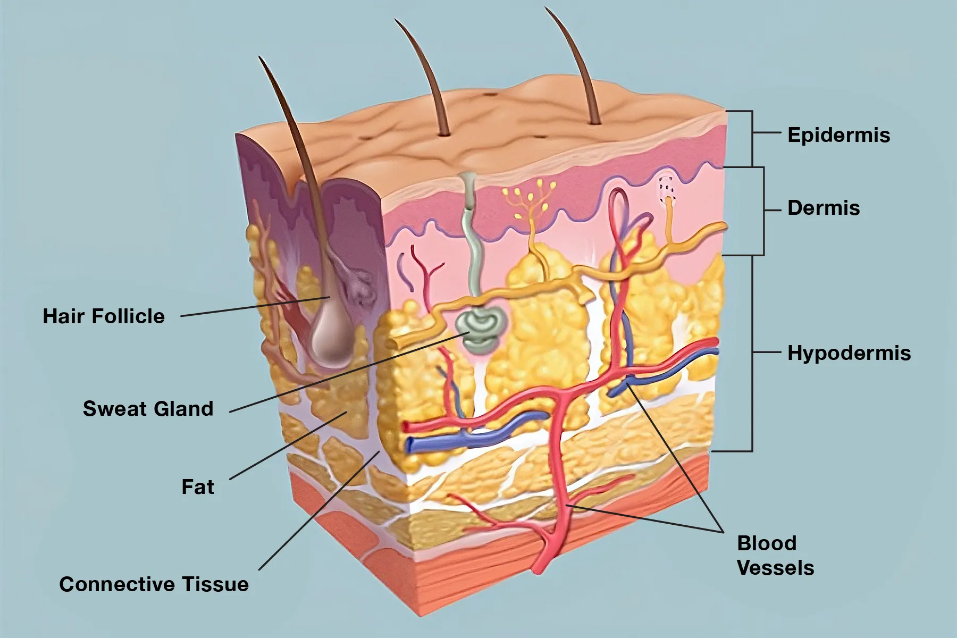
The skin consists mainly of:
Epidermis
Dermis
Subcutaneous layer
1. Epidermis
The epidermis is the outermost layer of the skin. It’s made up of three layers. These are horny layer, granular layer and Malpighian layer.
It provides protection against:
*Physical injury.
*Microorganisms.
*Excessive water loss.
The outer part contains dead, hardened cells containing keratin.
2. Dermis
The dermis lies beneath the epidermis.
It contains:
*Blood capillaries
*Sweat glands
*Sebaceous glands
*Hair follicles
*Sensory receptors
,Nerve endings
The dermis therefore plays important roles in sensation, temperature regulation and nourishment of the skin.
3. Subcutaneous Layer
The subcutaneous layer lies below the dermis.
It contains connective tissue and fat.
Functions
1. Insulates the body.
2. Stores energy as fat.
3. Cushions internal structures.
4. Helps attach the skin to underlying tissues.
FUNCTIONS OF THE SKIN
1. Protection
The skin protects the body against:
*Injury
*Microorganisms
*Harmful substances
*Excessive loss of water
2. Excretion
Sweat produced by sweat glands contains:
*Water
*Mineral salts
*Small amounts of urea
Sweating therefore helps remove small amounts of metabolic waste.
3. Temperature Regulation
The skin helps maintain a constant body temperature.
When the body becomes too hot:
*Sweat glands produce more sweat.
*Sweat evaporates from the skin surface and cools the body.
*Blood vessels near the skin surface widen (vasodilation), increasing heat loss.
When the body becomes cold:
*Skin blood vessels narrow (vasoconstriction), reducing heat loss.
*Sweating decreases.
*Muscles may contract rapidly, producing heat through shivering.
4. Sensation
Sensory receptors in the skin detect:
*Touch
*Pressure
*Pain
*Heat
*Cold
5. Vitamin D Production
The skin helps the body produce vitamin D when exposed to ultraviolet radiation from sunlight.
SKIN AS AN EXCRETORY ORGAN
The skin contains sweat glands.
Sweat is produced when the body needs to lose heat and contains mainly: Water, Mineral salts and Small amounts of urea
Sweat passes through sweat ducts and reaches the skin surface.
Therefore, the skin contributes to excretion, although the kidneys are the main organs responsible for removing urea and regulating water and salt balance.
COMMON SKIN PROBLEMS
Some common skin problems include:
*Acne
*Ringworm
*Eczema
*Athlete’s foot
*Bacterial skin infections
*Scabies
WAYS OF CARING FOR THE SKIN
Bathe regularly.
Keep the skin clean and dry.
Wear clean clothes.
Avoid sharing personal items such as towels.
Eat a balanced diet.
Drink adequate clean water.
Protect the skin from excessive sunlight.
Seek appropriate medical treatment for persistent skin problems.
Liver and Skin as Excretory Organs
Liver Skin
Converts ammonia to urea. Removes small amounts of urea through sweat.
Processes some toxic substances. Removes excess water and salts through sweat.
Processes waste products from haemoglobin breakdown. Helps regulate body temperature.
Produces bile containing certain waste products. Contains sensory receptors.
SUMMARY
The liver is an important organ involved in metabolism, detoxification, storage, bile production and excretion. It converts toxic ammonia into urea, which is later removed by the kidneys.
The skin Is the body’s outer covering and performs several functions, including protection, sensation, temperature regulation and excretion. Sweat glands remove small amounts of water, salts and urea. Both the liver and skin therefore contribute to maintaining a stable internal environment.
Evaluation
OBJECTIVE QUESTIONS
Which organ converts ammonia into urea?
A. Kidney
B. Liver
C. Skin
D. Lung
The functional cells of the liver are called
A. Nephrons
B. Neurones
C. Hepatocytes
D. Alveoli
Which substance is produced by the liver and helps in the digestion of fats?
A. Insulin
B. Bile
C. Sweat
D. Urea
The process by which the liver removes the amino group from excess amino acids is called
A. Digestion
B. Deamination
C. Filtration
D. Transpiration
Which of the following is NOT a function of the liver?
A. Detoxification
B. Storage of glycogen
C. Production of bile
D. Production of urine
The outermost layer of the skin is the
A. Dermis
B. Epidermis
C. Subcutaneous layer
D. Muscle layer
Which structure in the skin produces sweat?
A. Hair follicle
B. Sebaceous gland
C. Sweat gland
D. Sensory receptor
Which of the following helps the body lose heat when it becomes too hot?
A. Reduced sweating
B. Vasoconstriction
C. Sweating and vasodilation
D. Reduced blood flow to the skin
Sweat contains mainly
A. Blood cells and proteins
B. Water, mineral salts and small amounts of urea
C. Glucose and starch
D. Bile and enzymes
Which of the following is a common disease of the liver?
A. Hepatitis
B. Asthma
C. Malaria
D. Rickets
Theory Questions
1a. Describe the structure of the liver and state five functions of the liver.
1b. Explain how the liver helps in the removal of nitrogenous waste from the body.
2a. Describe the three main layers of the skin and state one function of each.
2b. Explain how the skin helps to regulate body temperature and remove waste products.
Mention three liver diseases and three skin problems, and state two ways of caring for the liver and skin.