
REGULATION OF INTERNAL ENVIRONMENT ( HOMEOSTASIS). Lesson Note
This SS3 Biology lesson note covers REGULATION OF INTERNAL ENVIRONMENT ( HOMEOSTASIS). for First Term, Week 1.
Learning Objectives
- At the end of the lesson, students should be able to;
- Define regulation of the internal environment (homeostasis).
- Explain the functions of the kidney.
- Describe the structure of the kidney.
- Identify common kidney diseases, their effects, and remedies.
- State ways of maintaining healthy kidneys.
Lesson Note
A. MEANING OF REGULATION OF THE INTERNAL ENVIRONMENT (HOMEOSTASIS)
Regulation of the internal environment, also called homeostasis, is the ability of an organism to maintain a constant internal environment in an organism.
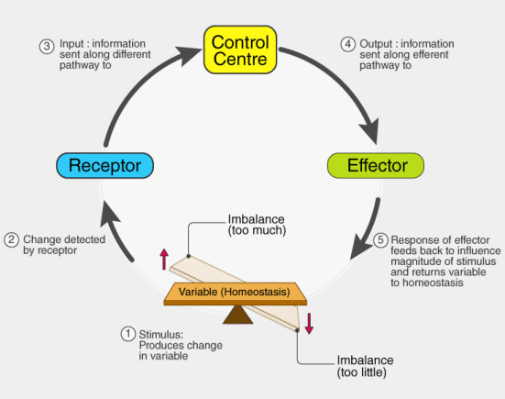
The body regulates body temperature, water balance, salt concentration, blood sugar level and pH (acid-base balance)
The major organs involved include the kidneys, skin, lungs, liver, and brain.
B. THE KIDNEY
The kidneys are a pair of bean-shaped organs located at the back of the abdomen, one on either side of the backbone. They are reddish-brown and each is about the size of a fist.
C. FUNCTIONS OF THE KIDNEY
It excretes nitrogenous wastes like urea.
It generates heat during cold.
It removes waste products, excess ions, and water.
Regulates the amount of water in the body.
Maintains the balance of mineral salts (electrolytes).
Helps regulate blood pressure.
Maintains the body’s acid-base (pH) balance
Produces hormones that stimulate red blood cell production.
D. STRUCTURE OF THE KIDNEY
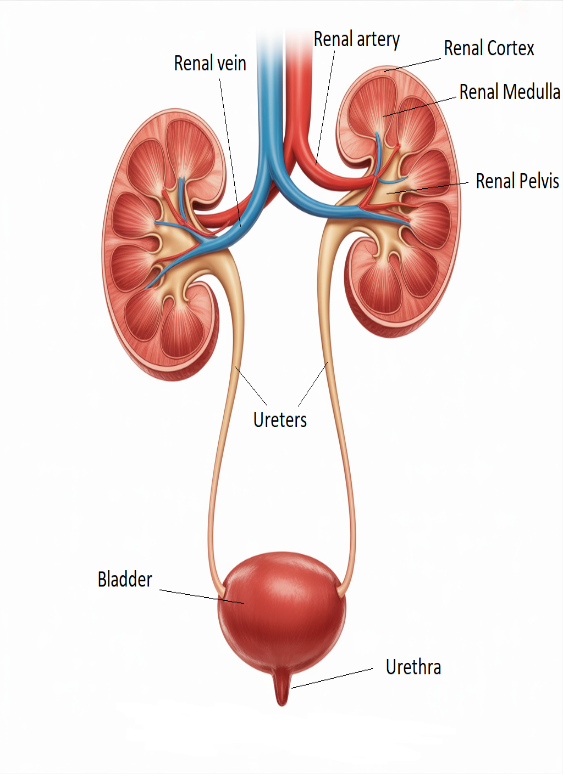
The kidney consists of the following parts:
1. Renal Capsule: Tough outer covering that protects the kidney.
2. Cortex: Outer region where filtration begins.
3. Medulla: Inner region containing the renal pyramids.
4. Renal Pelvis: Funnel-shaped cavity that collects urine.
5. Ureter: Tube that carries urine from the kidney to the bladder.
6. Renal Artery: Brings oxygenated blood containing wastes to the kidney.
7. Renal Vein: Carries filtered blood away from the kidney.
F. NEPHRON
The nephron is the structural and functional unit of the kidney. The nephron filters blood and forms urine.
It consists of:
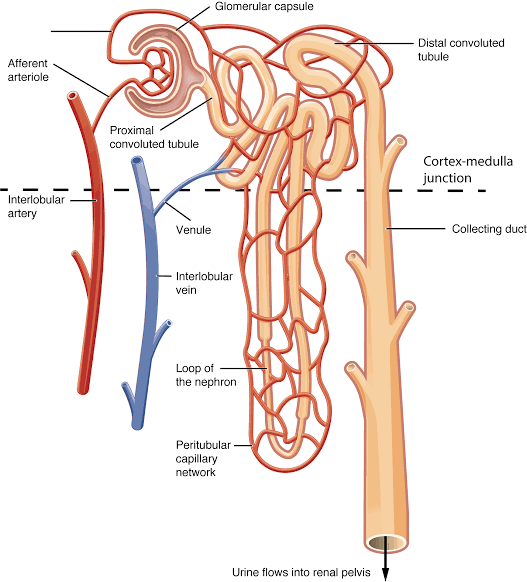
1. Bowman’s capsule: This is a cup-shaped sac at the start of the
in the kidney that collects filtered fluid (filtrates) from the
blood.
2. Glomerulus: a network of small blood vessels located at the start
of a nephron in the kidney for filtering waste, water, and extra
substances from the blood which leads to formation of urine.
3. Proximal convoluted tubule: the first part of the kidney's renal tubule,
immediately after Bowman’s capsule in the renal cortex. Its function is
reabsorption vital nutrients from the filtrate
4. Loop of Henle: a U-shaped part of the kidney's that helps to reabsorbs water and salt to concentrate urine in the body
5. Distal convoluted tubule: is a key part of the kidney's nephron that makes final, fine-tuned adjustments to the blood and urine. its primarily functions in the absorption of ions such as sodium, chloride, and calcium.
6. Collecting duct: its form the final segments of the kidney nephron where final reabsorption water, electrolyte, and acid-base balance occur before urine leaves the body.
G. KIDNEY
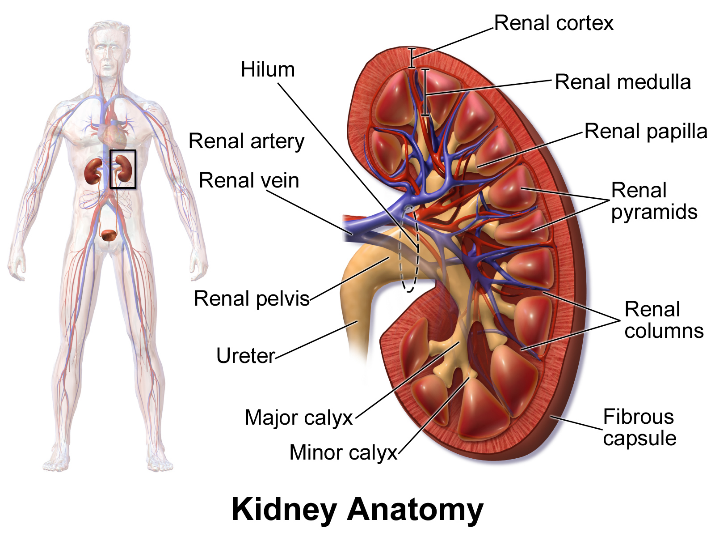
The kidney is the reddish-brown, two bean-shaped organs. It is bout fist- size (4cm – 5cm long). It is the organ in the body that filters and remove waste from the blood. They sit in your lower back, just below the rib cage, with one on each side of the spine.
H. MAJOR FUNCTIONS OF KIDNEY
i) Filtration: They clean toxins, extra water, and waste products like urea and creatinine from the blood to form urine, which pass out of the body.
ii) Balance: They help keep a steady balance of water and important minerals (electrolytes) like sodium and potassium in the body.
iii) Hormones: They release hormones that help control blood pressure, make red blood cells, and keep bones health
I. COMMON KIDNEY DISEASES
1. KIDNEY STONES
Hard deposits derived from minerals and salts that form in the kidneys and causes blockage of urine and pains.
2. NEPHRITIS
Inflammation of the blood vessels caused by infection or immune disorders.
3. DIURESIS: this is a situation in which large quantities of dilute urine are produced due to cells or the kidney tubules are not reabsorbing water from the glomerular filtrate. This is common in patients suffering from diabetics insipidus.
4. URINARY TRACT INFECTION (UTIs)
Infections affecting the urinary system, including the kidneys, ureters, bladder, or urethra.
5. POLYCYSTIC KIDNEY DISEASE (PKD): Genetic disorder leading to the gathering of fluid- filled cysts in the kidneys.
J. EFFECTS OF KIDNEY DISEASES
I) Inability of the kidney to filter waste from the blood, resulting to a build-up of toxins.
ii) Swelling of the body (oedema).
iii) High blood pressure.
iv) Blood in urine.
v) Pain during urination.
vi) Frequent urination or reduced urine output.
vii) Fatigue and weakness.
viii) In severe cases, death if untreated.
ix) Presence of proteins and blood cells in the urine(nephritis).
K. REMEDIES AND PREVENTION
Drink plenty of clean water.
Eat a balanced diet.
Reduce excessive salt intake.
Exercise regularly.
Avoid smoking and excessive alcohol consumption.
Avoid misuse of drugs.
Treat infections promptly.
Go for regular medical check-ups.
Dialysis or kidney transplant may be required in severe kidney failure.
L. SUMMARY
Homeostasis helps the body maintain a constant internal environment. The kidneys are vital organs that remove wastes, regulate water and salts, and produce urine. Kidney diseases affect normal body functions but can often be prevented through healthy lifestyle habits and treated early with proper medical care.
Evaluation
1. What is homeostasis?
A. The breakdown of food in the body
B. The maintenance of a stable internal environment
C. The removal of undigested food
D. The movement of the body
2. Which of the following is NOT regulated by homeostasis?
A. Body temperature
B. Water balance
C. Blood sugar level
D. Hair colour
3. The major excretory organ responsible for removing urea from the blood is the
A. Heart
B. Liver
C. Kidney
D. Stomach
4. The structural and functional unit of the kidney is the
A. Nephron
B. Neuron
C. Alveolus
D. Villus
5. Which part of the kidney is the outer region where filtration begins?
A. Medulla
B. Cortex
C. Renal pelvis
D. Ureter
6. The tube that carries urine from the kidney to the urinary bladder is the
A. Urethra
B. Renal vein
C. Ureter
D. Renal artery
7. Which of the following is a kidney disease caused by hard deposits of minerals and salts?
A. Nephritis
B. Kidney stones
C. Polycystic kidney disease
D. Malaria
8. Which of the following may occur as an effect of kidney disease?
A. Improved blood filtration
B. Swelling of the body
C. Increased bone growth
D. Better digestion
9. Which of the following is a good way to maintain healthy kidneys?
A. Misusing drugs
B. Taking excessive salt
C. Drinking adequate clean water
D. Avoiding medical treatment
10. In severe kidney failure, which treatment may be required?
A. Vaccination only
B. Dialysis or kidney transplant
C. Physiotherapy only
D. Eye surgery
Theory Questions
1a) What is homeostasis?
b) Mention FIVE functions of the kidney.
c) Name the major parts of the kidney.
2a) What is a nephron?
b) List FOUR kidney diseases.
c) State five effects of kidney diseases.