
SEXUAL REPRODUCTION Lesson Note
This SS2 Biology lesson note covers SEXUAL REPRODUCTION for First Term, Week 2.
Learning Objectives
- At the end of the lesson, students should be able to:
- Define sexual reproduction.
- Explain the importance of sexual reproduction.
- Define gametes and fertilisation.
- Distinguish between male and female gametes.
- Explain the process of fertilisation.
- State the differences between sexual and asexual reproduction.
- Describe sexual reproduction in flowering plants.
- Explain the role of reproductive organs in humans
Lesson Note
A. MEANING OF SEXUAL REPRODUCTION
Sexual reproduction is defined as the joining of the male and female gametes to form a zygote which finally develops into an organism.
The fusion of the male and female gametes is called fertilisation.
Sexual reproduction usually involves two parents, although in some organisms one individual may produce both types of gametes.
Examples of organisms that reproduce sexually include: Humans, Goats, Dogs, Birds, Fish and Flowering plants
B. GAMETES AND FERTILISATION
GAMETES
Gametes are mature sexual reproductive cells having a single set of unpaired chromosomes.
There are two main types:
Male Gamete
The male gamete in humans is the sperm cell.
Female Gamete
The female gamete in humans is the egg cell (ovum).
Gametes contain half the normal number of chromosomes of the organism. When the male and female gametes fuse, the resulting zygote receives genetic material from both parents.
FERTILISATION
Fertilisation is the fusion of haploid sex cells resulting in the formation of a diploid zygote.
In humans:
Sperm cell + Egg cell → Zygote
The zygote divides repeatedly by mitosis and develops into an embryo and eventually a new individual.
TYPES OF FERTILISATION
INTERNAL FERTILIZATION
Fertilisation occurs inside the body of the female.
Examples: Humans, Goats, Dogs and Birds
EXTERNAL FERTILIZATION
Fertilisation occurs outside the body of the female, usually in water.
Examples: Many fish and Frogs
B. IMPORTANCE OF SEXUAL REPRODUCTION
Sexual reproduction is important because:
It produces new individuals.
It ensures the continuation of a species.
It produces genetic variation among offspring.
Variation can help populations adapt to changing environmental conditions.
It allows characteristics from both parents to be passed to offspring.
It contributes to evolution over many generations.
C. SEXUAL REPRODUCTION IN HUMANS
The human reproductive system consists of male and female reproductive organs.
Male Reproductive Organs
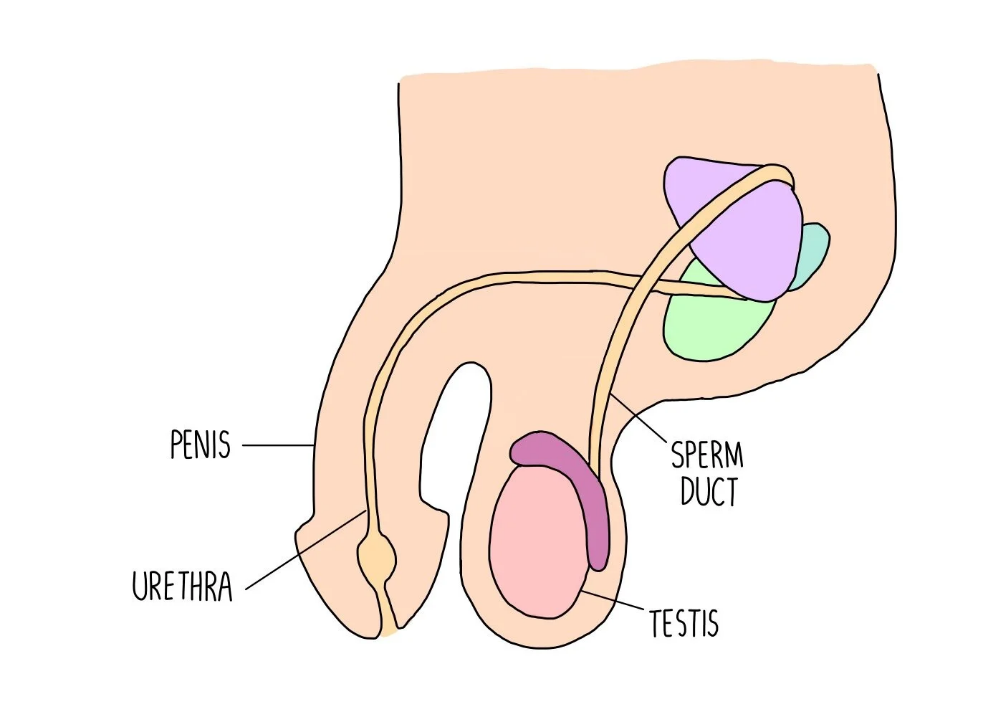
The major organs include:
*Testes
*Scrotum
*Sperm ducts
*Urethra
*Penis
*Accessory glands
Functions
1. Testes: Produce sperm cells and the hormone testosterone.
2. Scrotum: Holds the testes outside the main body cavity and helps maintain a suitable temperature for sperm production.
3. Sperm ducts: Transport sperm from the testes.
4. Urethra: Provides a passage through which semen leaves the body.
5. Penis: Transfers semen into the female reproductive tract during sexual intercourse.
Female Reproductive Organs
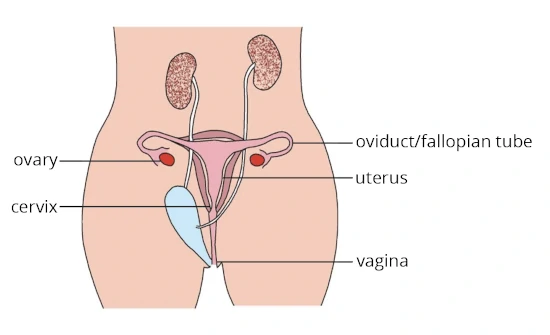
The major organs include:
*Ovaries
*Oviducts (Fallopian tubes)
*Uterus
*Cervix
*Vagina
Functions
1. Ovaries: Produce ova and female reproductive hormones.
2. Oviducts: Receive the ovum and are usually the site where fertilisation occurs.
3. Uterus: The embryo develops in the uterus during pregnancy.
4. Cervix: The lower opening of the uterus into the vagina.
5. Vagina: Receives sperm during sexual intercourse and serves as the birth canal.
D. SEXUAL REPRODUCTION in FLOWERING PLANTS
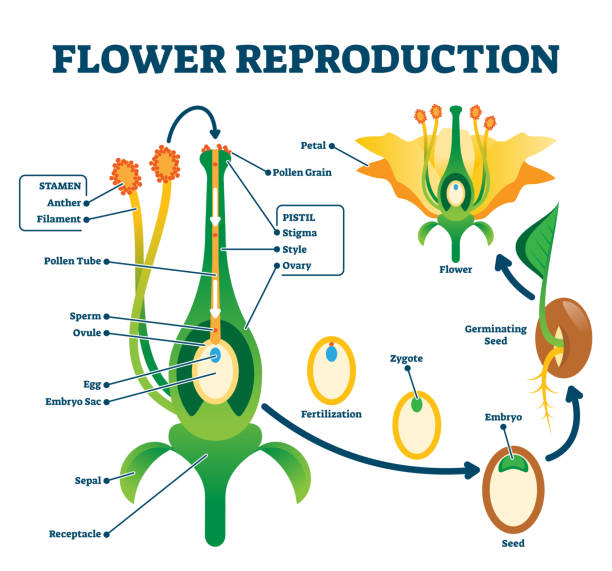
Sexual reproduction in flowering plants takes place mainly in the flower.
The reproductive structures are:
1. Male Reproductive Part – Stamen
The stamen consists of:
*Anther
*Filament
The anther produces pollen grains, which contain the male reproductive cells.
2. Female Reproductive Part – Carpel/Pistil
The carpel consists of:
*Stigma
*Style
*Ovary
The ovary contains ovules, which contain the female reproductive cells.
E. POLLINATION
Pollination is the transfer of pollen grains from the anther to the stigma of a flower.
There are two main types:
1. Self-Pollination
Pollen is transferred from the anther to the stigma of the same flower or another flower on the same plant.
2. Cross-Pollination
Pollen is transferred from the anther of one plant to the stigma of a flower on another plant of the same species.
F. FERTILIZATION IN FLOWERING PLANTS
After pollination, a pollen grain may germinate on the stigma and produce a pollen tube.
The pollen tube grows through the style towards the ovary and reaches an ovule.
The male gamete then fuses with the female gamete in the ovule to form a zygote.
The zygote develops into an embryo.
After fertilisation:
The ovule develops into a seed.
The ovary develops into a fruit.
The zygote develops into an embryo.
G. ADVANTAGES OF SEXUAL REPRODUCTION
Produces genetic variation.
Variation can improve the ability of a population to adapt to environmental changes.
It allows characteristics from two parents to combine.
It contributes to evolution.
It helps maintain diversity within a species.
H. DISADVANTAGES OF SEXUAL REPRODUCTION
It usually requires the production of specialised gametes.
It may require two parents or the involvement of another individual.
It is generally slower than asexual reproduction.
Fewer offspring may be produced in a given period.
Finding a suitable mate can be difficult for some organisms.
Reproduction requires considerable energy and resources.
Difference Between Sexual and Asexual Reproduction
Sexual Reproduction Asexual Reproduction
Involves male and female gametes. Does not involve fusion of gametes.
Fertilisation occurs. Fertilisation does not occur.
Usually involves genetic material from two parents. Usually involves one parent.
Produces genetic variation. Produces little genetic variation.
Generally slower. Generally faster.
Offspring are not usually genetically identical to a parent. Offspring are usually genetically similar to the parent.
SUMMARY
Sexual reproduction involves the formation and fusion of male and female gametes. The fusion of gametes is called fertilisation, and it produces a zygote. Sexual reproduction produces genetic variation, which is important for adaptation and evolution.
In humans, sperm and ova are the male and female gametes respectively. In flowering plants, the stamen is the male reproductive structure while the carpel is the female reproductive structure. Pollination occurs before fertilisation in flowering plants.
Evaluation
EVALUATION QUESTIONS
Sexual reproduction involves the
A. division of one cell into two
B. fusion of male and female gametes
C. production of spores only
D. formation of buds
The male reproductive cell in humans is the
A. ovum
B. zygote
C. sperm cell
D. embryo
The fusion of male and female gametes is called
A. Pollination
B. Germination
C. Fertilisation
D. Fragmentation
The product formed immediately after fertilisation is called a
A. Gamete
B. Zygote
C. Pollen grain
D. Foetus
In humans, fertilisation normally takes place in the
A. uterus
B. ovary
C. oviduct
D. vagina
The male reproductive part of a flower is the
A. carpel
B. stigma
C. stamen
D. ovary
Pollination is the transfer of pollen grains from the
A. stigma to the ovary
B. anther to the stigma
C. ovary to the anther
D. ovule to the stigma
Which of the following is an advantage of sexual reproduction?
A. It produces little genetic variation
B. It always involves only one parent
C. It produces genetic variation
D. It does not require gametes
Which of the following is an example of external fertilisation?
A. Human
B. Goat
C. Frog
D. Dog
After fertilisation in a flowering plant, the ovule develops into a
A. fruit
B. seed
C. leaf
D. flower.
Theory Questions
1a. Define sexual reproduction and fertilisation.
1b.State five importance of sexual reproduction.
2a. Differentiate between internal and external fertilisation, giving one example of each.
2b.Describe the process of sexual reproduction in flowering plants from pollination to fertilisation.
2c.State five differences between sexual and asexual reproduction.