
ELASTICITY OF DEMAND Lesson Note
Learning Objectives
This SS2 Economics lesson note covers ELASTICITY OF DEMAND for First Term, Week 5.
Lesson Note
Learning Objectives
Define elasticity of demand.
Identify and explain the major types of elasticity of demand.
Calculate price elasticity of demand using the percentage method and total expenditure approach.
Interpret elasticity values and distinguish elastic, inelastic, unitary, perfectly elastic and perfectly inelastic demand.
Illustrate the different degrees of price elasticity of demand graphically.
Explain the importance of elasticity of demand to consumers, producers and government.
MEANING OF ELASTICITY OF DEMAND
Elasticity of demand refers to the degree of responsiveness of the quantity demanded of a commodity to a change in one of the factors that determine demand, especially price, income or the price of related goods.
In simple terms, it measures how much demand changes when there is a change in price, income or the price of another commodity.
TYPES OF ELASTICITY OF DEMAND
1. Price Elasticity of Demand (PED)
Measures the responsiveness of quantity demanded to a change in the price of the commodity.
Formula: PED = Percentage change in quantity demanded ÷ Percentage change in price.
2. Income Elasticity of Demand (YED)
Measures the responsiveness of quantity demanded to a change in consumers' income.
Formula: YED = Percentage change in quantity demanded ÷ Percentage change in income.
TYPES OF INCOME ELASTICITY OF DEMAND
a. positive income elasticity of demand, is a type of income elasticity in which an increase in income of consumer will equally lead to an increase in the quantity of commodity demanded this type is applicable mainly to normal goods
b. negative income elasticity of demand this type of income elasticity of demand in which an increase in income of consumer will lead to a decrease in the quantity of commodity demanded this is applicable to inferior goods
3. Cross Elasticity of Demand (XED)
Measures the responsiveness of demand for one commodity to a change in the price of another related commodity.
Formula: XED = Percentage change in quantity demanded of A ÷ Percentage change in price of B.
MEASUREMENT OF PRICE ELASTICITY OF DEMAND
Price elasticity can be measured using the following methods:
Percentage Method
PED = Percentage change in quantity demanded ÷ Percentage change in price.
Percentage change = (New value − Original value) ÷ Original value × 100.
Example:
If the price of a commodity rises from ₦100 to ₦120 and quantity demanded falls from 50 units to 40 units:
Percentage change in quantity demanded = (40 − 50) ÷ 50 × 100 = −20%.
Percentage change in price = (120 − 100) ÷ 100 × 100 = 20%.
PED = −20% ÷ 20% = −1. In practice, the negative sign is often ignored when stating the degree, so PED = 1 (unitary elastic).
DEGREES OF PRICE ELASTICITY OF DEMAND
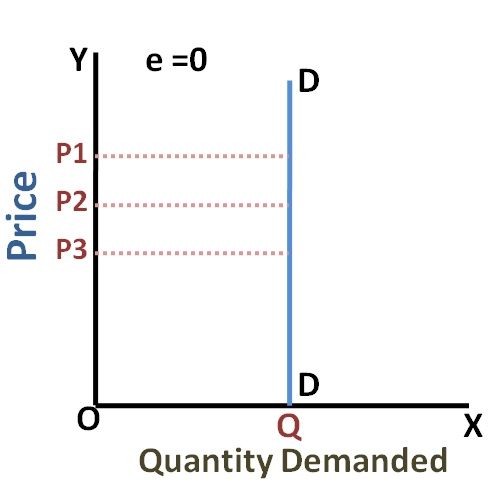
1. Perfectly Inelastic Demand (PED = 0)
Demand is said to be perfectly inelastic if a change in price has no effect whatsoever on the quantity of goods demanded
Graphical form: The demand curve is vertical.
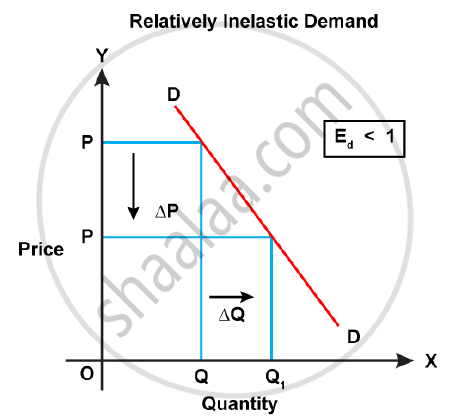
2. Inelastic Demand (0 < PED < 1)
Demand is said to be inelastic if a larger change in price leads to a small or slight change in the quantity of goods demanded
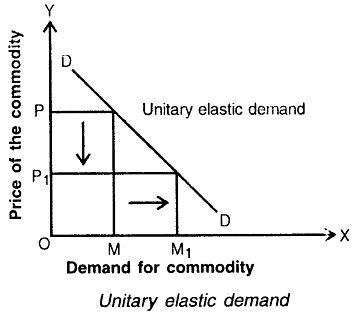
3 Unitary Elastic Demand (PED = 1)
Demand is said to be unitary when a change in price leads to an equal change in the quantity of goods demanded
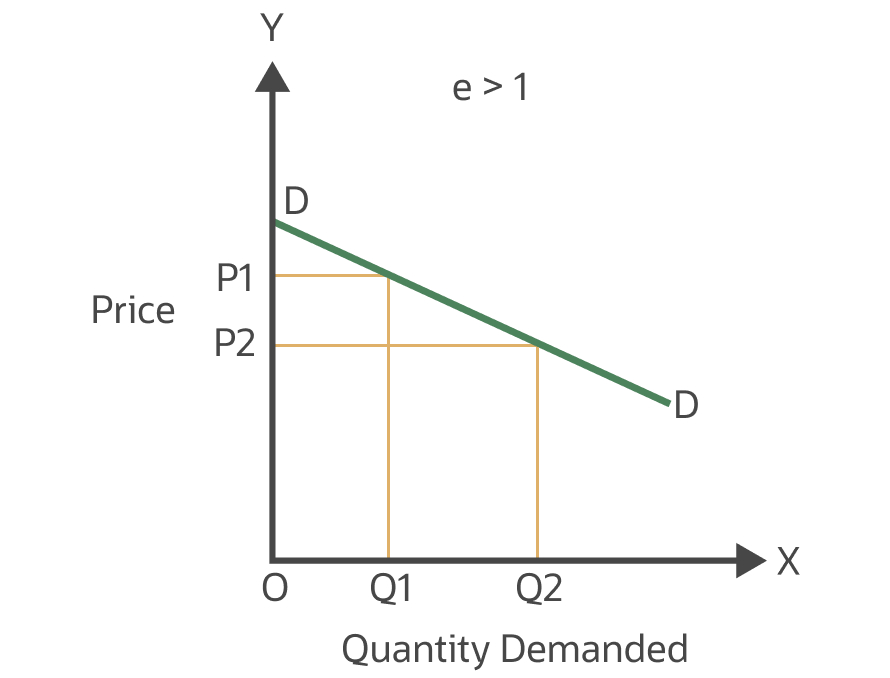
4 Elastic Demand (PED > 1)
Quantity demanded changes by a greater percentage than price.
Demand is said to be elastic if a small change in price leads to a greater change in quantity of goods demanded
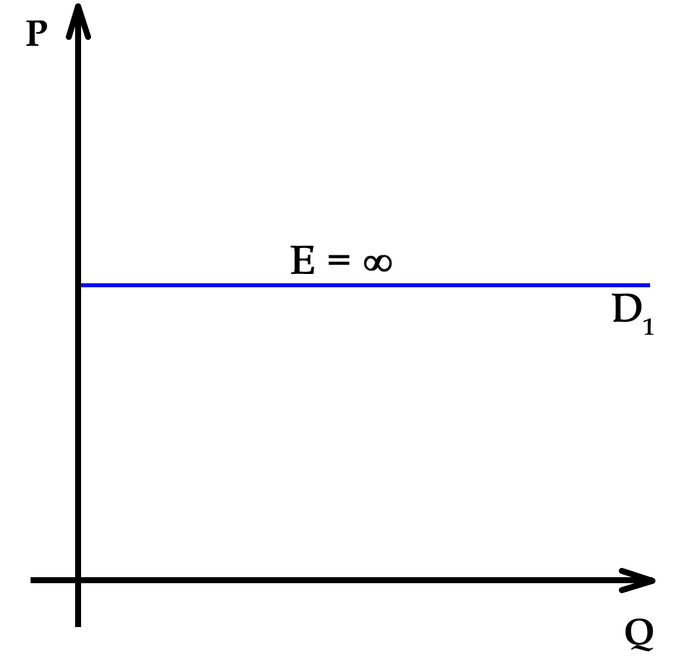
5 Perfectly Elastic Demand (PED = ∞)
Demand is said to be perfectly elastic when a change in price brings about an infinite effect on the quantity of goods demanded.
Graphical form: The demand curve is horizontal.
MEASUREMENT OF INCOME ELASTICITY OF DEMAND
Worked examples
A weekly income of a clerk was increased from #100 to #125 as a result of his promotion in the office he is able to purchase 300 loaves of bread instead of 200 per week. Calculate:
1. the coefficient of his income elasticity of demand
2. the demand elastic or in elastic why
3 what kind of goods is bread to the consumer
Solutions
Income Quantity demanded
Old New Old loaves New loaves
100 125 200 300
a. Percentage change in quantity demanded
=New QD - old QD
Old QD
= 300- 200/200× 100/ 1
= 100/200× 100/1= 50%
b. Percentage change in income
new income - old income /old income × 100 / 1
125 -200 /100 × 100 / 1
25 / 100 × 100/ 1 = 25%
Income elasticity 50/25= 2.
The coefficient of income elasticity = 2 that is to say the coefficient of income elasticity of demand is elastic it is elastic because elasticity is greater than 1
c. the kind of goods bread is to the consumer is a normal good because as the income increases his demands for bread also increases
MEASUREMENT OF CROSS ELASTICITY OF DEMAND
Worked examples
The table below shows the response of quantity demanded to change in price of two pairs of commodities use the table to answer the question that follows

Calculate:
1. the cross elasticity of demand for
a) i) maltina and maltonic
b) ii) close up and Maclean
2. Are their elasticities elastic or inelastic, state your reasons
Solutions
1. cross elasticity of demand for maltina and maltonic
Let X = maltonic, y = maltina
1) Percentage change in quantity demanded of maltonic (X)=
new Qd - originalQd/ original Qd × 100/1
300-200/200× 100 /1
100/100× 100/1 = 50%
ii percentage change in the price of maltina (y)
New price - original price. / Original price × 100/1
80-50 / 50 × 100/1
30/50 × 100/1. = 60%.
Cross elasticity of maltonic and maltina
=50/60. =0.83
ii) cross elasticity of demand for MacLean and close up letX = MacLean Y= close up
I) %change in quantity demanded of MacLean
(x) =New Qd - original Qd /original Qd× 100 / 1
150-120/120× 100/1
30/120× 100/1
25 %
Ii) % change in the price of close up ( Y )
New price - original price/original price × 100 /1
60-50/50×100/1
10/50× 100/1. =20%
Cross elasticity of demand for MacLean and close up 25/20. =1.25
2a) the cross elasticity for maltina and maltonic is inelastic because the elasticity which is 0.8 is less than 1
2b) the cross elasticity for MacLean and close up is elastic because the elasticity which is 1.25 is greater than 1
Importance of Elasticity of Demand to Consumers
Helps consumers understand how price changes may affect the quantity they buy.
Assists consumers in budgeting and planning expenditure on goods and services.
Helps consumers decide which goods have close substitutes when prices change.
Shows how changes in income can affect demand for normal, inferior and luxury goods
Importance of Elasticity of Demand to Producers
Helps producers make pricing decisions and estimate the likely response of buyers.
Assists producers in forecasting sales and revenue.
Helps firms determine whether reducing price is likely to increase total revenue.
Guides decisions about advertising and product differentiation, especially where substitutes exist.
Importance of Elasticity of Demand to Government
Helps the government predict the likely effect of indirect taxes on demand and tax revenue.
Assists in deciding which goods may bear higher or lower taxes.
Helps the government estimate the effect of price changes on consumers.
Useful in agricultural and commodity pricing policies.
Evaluation
1. Elasticity of demand measures the responsiveness of quantity demanded to a change in ______.
A. population only
B. a determinant of demand
C. supply only
D. production cost only
2. Price elasticity of demand is calculated as ______.
A. % change in price ÷ % change in quantity demanded
B. % change in quantity demanded ÷ % change in price
C. price × quantity
D. income ÷ price
3. If PED is greater than 1, demand is said to be ______.
A. perfectly inelastic
B. inelastic
C. unitary elastic
D. elastic
4. When PED is equal to zero, demand is ______.
A. perfectly inelastic
B. perfectly elastic
C. unitary elastic
D. relatively elastic
5. A perfectly elastic demand curve is ______.
A. vertical
B. downward sloping
C. horizontal
D. upward sloping
6. When the percentage change in quantity demanded equals the percentage change in price, PED is ______.
A. 0
B. less than 1
C. 1
D. infinity
7. Income elasticity of demand measures the responsiveness of demand to a change in ______.
A. price
B. income
C. supply
D. population only
8. Cross elasticity of demand relates the demand for one commodity to a change in the ______ of another commodity.
A. income
B. quantity supplied
C. price
D. cost of production
9. If price rises and total expenditure falls, demand is generally ______.
A. elastic
B. inelastic
C. perfectly inelastic
D. zero
10. Elasticity of demand is useful to government mainly because it helps government make decisions about ______.
A. taxation and pricing policies
B. school uniforms only
C. weather conditions
D. population names
Theory Questions
1a. Define elasticity of demand.
1b. State and explain the three major types of elasticity of demand.
2a. Calculate the price elasticity of demand when price rises from ₦50 to ₦60 and quantity demanded falls from 100 units to 80 units.
2b. Explain the meaning of perfectly inelastic demand and perfectly elastic demand.