
INTRODUCTION TO BIOLOGY Lesson Note
This SS1 Biology lesson note covers INTRODUCTION TO BIOLOGY for First Term, Week 1.
Learning Objectives
- At the end of the lesson, students should be able to:
- Define Biology.
- Mention the major branches of Biology.
- State the importance of studying Biology.
- Explain the levels of organization of life.
- Explain the complexity of organization in higher organisms.
- State some advantages and disadvantages of studying Biology.
Lesson Note
A: MEANING
Biology is the branch of science that deals with the study of living organisms, their structures, functions, growth, reproduction, evolution and relationship with their environment.
The word Biology comes from two Greek words, which are Bios (life) and Logos (study). Therefore, Biology literally means the study of the life of plants and animals.
Biology is broadly divided into Botany (the study of plants) and Zoology (the study of animals). Other areas include Ecology, Microbiology, Genetics, Physiology and Anatomy.
B. CHARACTERISTICS OF LIVING ORGANISMS
Living organisms possess certain characteristics. Which includes:
i) Locomotion: Ability to change position or move parts of the body.
ii) Respiration: this is the breakdown of food substances by aerobic or anaerobic respiration.
iii) Irritability: Ability to detect and respond to stimuli.
iv) Growth: Permanent increase in size and dry mass.
v) Reproduction: Ability to produce offspring.
vi) Excretion: Removal of metabolic waste products.
vii) Nutrition: Obtaining and using nutrients.
viii) Adaptation: ability of living things to adjust to changes in their various environment.
ix) Life span/ death: All living things must die, because they have definite and limited period of existence.
X) Competition: this is the ability of living things to fight for all necessities of life.
C. IMPORTANCE OF BIOLOGY
The study of Biology is important in many areas of life.
i) Medicine: Helps us understand diseases, body functions and methods of treatment.
ii) Agriculture: Helps in crop production, animal breeding and pest control.
iii) Environmental conservation: Helps us understand ecosystems and protect natural resources.
iv) Food production: Helps improve the production and preservation of food.
v) Biotechnology: Provides knowledge used in producing useful biological products.
vi) Public health: Helps in understanding diseases and preventing their spread.
vii) Industry: Biological knowledge is useful in industries such as pharmaceuticals and food processing.
viii)Understanding the human body: Helps us understand how body organs and systems function.
D. DISADVANTAGES OF BIOLOGY
As outlined above, biology has many benefits, but some biological knowledge and its applications can have disadvantages when is not properly applied.
i) Cost of research: Biological research can require expensive equipment and laboratories.
ii) Environmental problems: Some biological technologies may cause environmental damage if poorly managed.
iii) Spread of diseases: Increased human and animal movement can contribute to the spread of infectious diseases.
iv) Ethical problems: Some areas of biological research, such as genetic manipulation, may raise ethical concerns.
v) Loss of biodiversity: Certain agricultural and biological practices can reduce biodiversity if poorly managed.
vi) Misuse of biological knowledge: Biological discoveries can be wrongly applied in ways that may harm humans or the environment.
E. LEVEL OF ORGANIZATION OF LIFE
Living organisms are organized from simple structures to more complex structures.
The major levels are:
Cell → Tissue → Organ → System → Organism
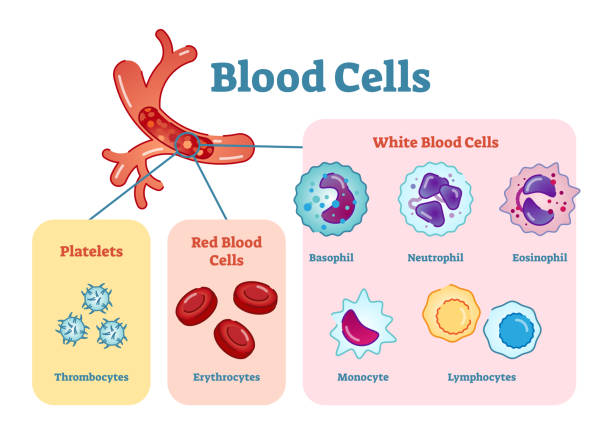
i) CELL
The cell is the basic structural and functional unit of life.
Examples: Red blood cell, Nerve cell, Root hair cell
ii) TISSUE
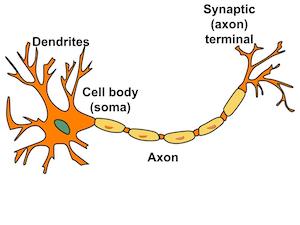
A tissue is a group of similar cells working together to perform a particular
function. Examples: Muscle tissue, Nervous tissue, Xylem tissue
iii) ORGAN
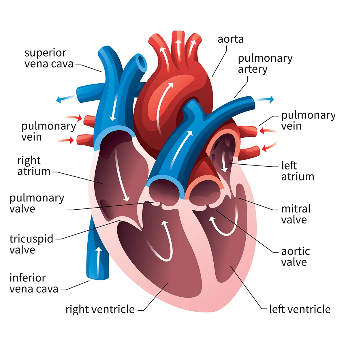
An organ consists of different tissues working together to perform specific
functions. Examples: Heart, Kidney, Leaf, Stomach
iv) SYSTEM
A system consists of several organs working together to perform a major function.
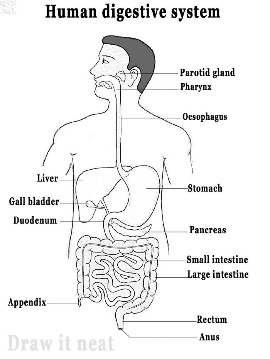
Examples: Digestive system, Respiratory system, Circulatory system, Nervous system
F. ORGANISM
An organism is a complete living thing capable of carrying out life processes.
Examples: Human, Goat, Maize plant, Amoeba
G. COMPLEXITY OF ORGANIZATION IN HIGHER ORGANISMS
In higher organisms, there is structural level of their cells from specialized cell to tissue with similar cells to organ and finally system. This allows for proper functioning of the whole body. This complexity is found in higher animal with multiple cells compare to unicellular organism. For example, a human being is made up of many specialized cells, similar cells form tissues, tissues form organs, and organs work together as asystem.
Example: Human Digestive System
Cells (red blood cell) → Tissues (nerve tissue) → organ (heart) → System (circulatory system) → Human
The heart as an organ contains different tissues, including muscle tissue, epithelial tissue, connective tissue, and nervous tissue. These tissues work together to enable circulation of blood.
H. SIMPLE AND HIGHER ORGANISMS
i) Simple Organisms
Simple organisms may consist of only one cell.
For example, Amoeba is unicellular. It’s single cell and carries out all necessary life processes.
ii) Higher Organisms
Higher organisms are usually multicellular and have specialized cells. For example, humans have specialized cells, different tissues, different organs and organic systems
This organization allows different parts of the body to perform specialized functions efficiently.
I. IMPORTANCE OF ORGANIZATION
The complexity of organization provides several advantages, these include:
i) division of labour: Different cells and organs perform specialised functions.
ii) greater efficiency: Each part becomes specialised for a particular function.
iii) better coordination: Organ systems work together to maintain the organism.
iv) improved survival: Specialised structures enable organisms to adapt to different environments.
v) ability to perform complex activities: Higher organisms can carry out many functions simultaneously.
J. DISADVANTAGES OF COMPLEX ORGANIZATION
i) Greater energy requirement: More energy is needed to maintain the many cells and organs.
ii) Greater dependence: Organs depend on one another to function properly.
iii) Complexity of diseases: A problem in one organ system may affect other systems.
Iv) Longer development: Higher organisms often take longer to grow and mature.
v) More complex reproduction: Reproduction may require specialised organs and processes.
H. SUMMARY
Biology is the study of living organisms and their activities. Living organisms carry out processes such as nutrition, respiration, growth, movement, sensitivity, excretion and reproduction.
In multicellular organisms, life is organized from cells to tissues, tissues to organs, organs to organ systems and finally to the complete organism. Higher organisms have specialised structures that allow division of labour and efficient performance of life processes, although this complexity also brings greater energy requirements and interdependence.
Evaluation
OBJECTIVES
1. What is Biology?
A. Study of rocks
B. Study of living organisms
C. Study of weather
D. Study of machines
2. The basic structural and functional unit of life is the
A. Organ
B. Tissue
C. Cell
D. Organ system
3. A group of similar cells performing a particular function is called a
A. Tissue
B. Organ
C. System
D. Organism
4. Which of the following is an organ?
A. Muscle tissue
B. Red blood cell
C. Kidney
D. Nerve cell
5. Which sequence shows the correct level of organization?
A. Organ → Cell → Tissue → Organism
B. Cell → Tissue → Organ → Organ system → Organism
C. Tissue → Cell → Organism → Organ
D. Organism → Organ system → Cell → Tissue
6. Which of the following is an example of a unicellular organism?
A. Human
B. Goat
C. Amoeba
D. Maize
7. One major advantage of organization in higher organisms is
A. Lack of specialization
B. Division of labour
C. Reduced coordination
D. Inability to adapt
8. Which of the following is a disadvantage of complex organization?
A. Division of labour
B. Greater efficiency
C. Greater dependence among organs
D. Specialization of cells
9. The branch of Biology that deals mainly with plants is
A. Zoology
B. Botany
C. Ecology
D. Anatomy
10. Which of the following is NOT a characteristic of living organisms?
A. Growth
B. Respiration
C. Reproduction
D. Rusting
Theory Questions
1a) Define Biology and state the meaning of the two Greek words from which the word Biology is derived.
1b) Mention FIVE characteristics of living organisms.
2a) State the FOUR levels of organization of life in the correct order, from simplest to most complex.
2b) Explain THREE reasons why higher organisms have a complex level of organization.
2c) State TWO advantages and TWO disadvantages of complexity in higher organisms.