
ALKANOIC (CARBOXYLIC) ACID Lesson Note
This SS3 Chemistry lesson note covers ALKANOIC (CARBOXYLIC) ACID for First Term, Week 1.
Lesson Note
DEFINTION
ALKANOIC ACIDS
Alkanoic acid also known as carboxylic acid is a hydrocarbon containing the carboxylic group (-COOH) and forming its compound using the general formula CnH2n+1COOH.
Alkanoic acids are named by replacing the “e” in the corresponding alkane name with “-oic” . The function group (-COOH), which is the carboxyl group combines a carbonyl (C=O) and hydroxyl (-OH) group.
NATURAL SOURCES OF ALKANOIC ACID
i) Stings of ants and bees (Methanoic acid)
ii) Fermented fruit juices and vinegar (Ethanoic acid)
iii) Generally, in natural fats and oils of animals and plants
MEMBERS OF ALKANOIC ACID
1. METHANOIC ACID

i) Molecular formula: CH2O2
ii) Structural formula: HCOOH
iii) Common name: Formic acid
2. ETHANOIC ACID
i) Molecular formula: C2H4O2
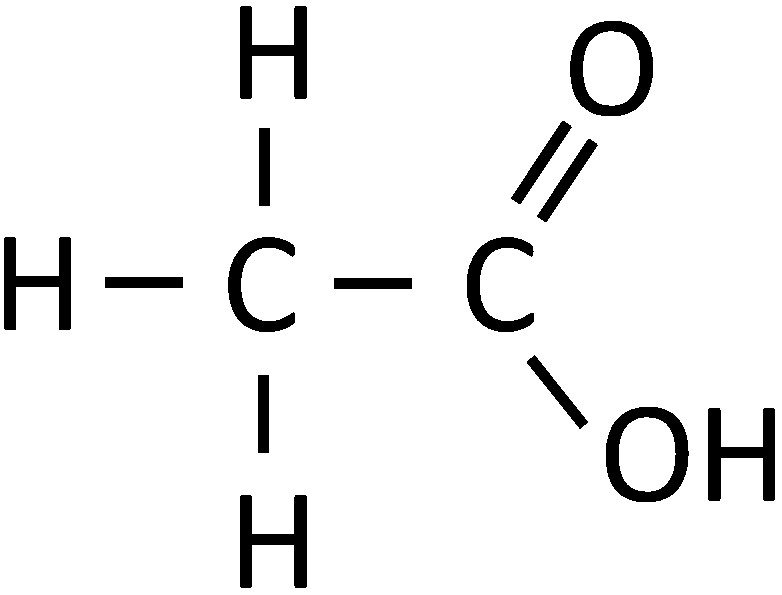
ii) Structural formula: CH3COOH
iii) Common name: Acetic acid
3. PROPANOIC ACID
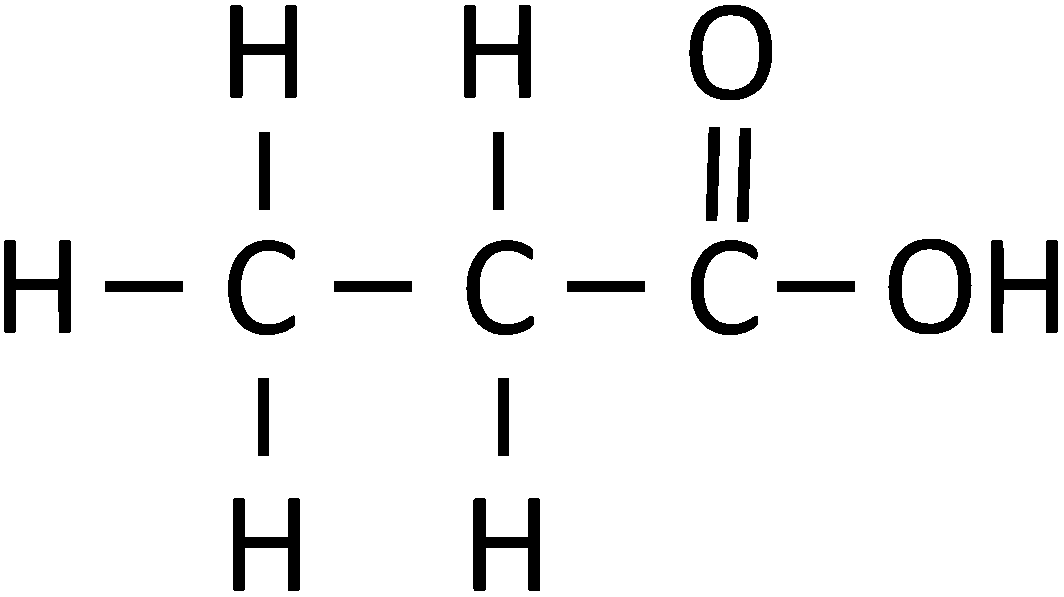
i) Molecular formula: C3H6O2
ii) Structural formula: CH3CH2COOH
iii) Common name: propionic acid
4. BUTANOIC ACID
i) Molecular formula: C4H8O2
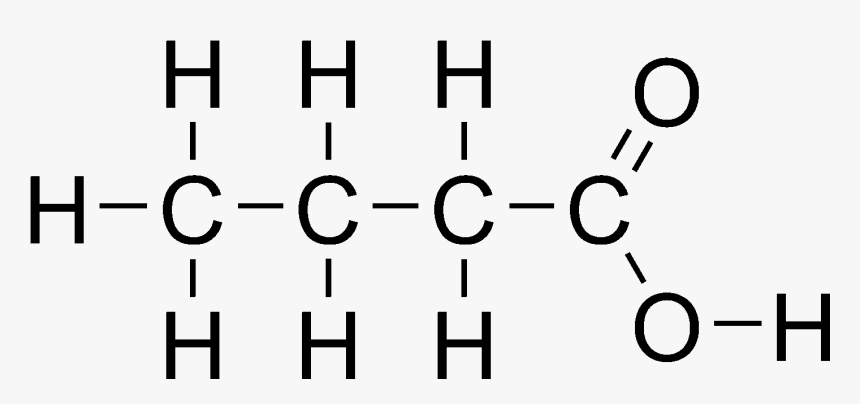
ii) Structural formula: CH3(CH2)2COOH
CH3CH2CH2COOH
C3H7COOH
iii) Common name: Butyric acid
CLASSIFICATION OF ALKANOIC ACID BASED ON THE NUMBER OF THEIR FUNCTIONAL GROUP
Alkanoic acids are classified based on the number of carboxyl groups (-COOH) contain per molecule into:
i) Monocarboxylic acid: This contains one carboxylic group (-COOH) per molecule. There general formula is CnH2n + 1COOH. Examples are Methanoic acid (HCOOH), Ethanoic acid (CH3COOH), e.t.c
ii) Dicarboxylic acid: They have two carboxylic groups per molecule. There general formula is HOOC-(CH2)n-COOH. Examples are Ethanedioic acid / oxalic acid (HOOC-COOH), Butanedioic acid / succinic acid (HOOC-CH2-CH2-COOH), cis-butenedioic acid/malei acid HOOC-CH=CH-COOH
iii) Tricarboxylic (or Polycarboxylic) Acids. It contains three or more carboxylic (-COOH) groups per molecule. Example: Citric acid / 2-hydroxypropane-1,2,3-tricarboxylic acid/citric acid
PHYSICAL PROPERTIES OF ALKANOIC ACID
1. Short chained alkanoic acids like methanoic acid are colourless liquid at room temperature while long-chained such as stearic are wax liked solid
2. They possess sharp and pungent smell with sour taste
3. They are soluble in water
4. They have much higher boiling points than alkanes and alcohols (alkanols) of similar molecular size
CHEMICAL PROPERTIES
1. Weak acidity: It is a weak acid due to its partial ionization in water; it turns blue litmus red
CH3COOH(aq) CH3COO (aq) + H+
2. Reaction with Reactive Metals: Alkanoic acid will react with highly electropositive metals (sodium, potassium, or calcium) to produce metal alkanoate salt and hydrogen gas
2CH3COOH(aq) + 2Na(s) 2CH3COO Na+(aq) + H2
3. Neutralization with Bases: It reacts with metal hydroxides or bases to form an alkanoate salt and water.
Ethanoic acid + Sodium hydroxide:
CH3COOH(aq) + NaOH(aq) CH3COONa(aq) + H2O(l)
4. Reaction with carbonate: It react with metal carbonates or hydrogen carbonates to produce a alkanoate (salt), water, and effervescence carbon dioxide gas.
Ethanoic Acid and Sodium Carbonate:
2CH3COOH + Na2CO3 2CH3COONa + H2O + CO2
5. Reaction with Alcohol (alkanol): It reacts with an alcohol in the presence of a strong acid catalyst (concentrated sulfuric acid), it forms an organic chemical compound (ester) and water. This process is known as esterification
RCOOH + R’OH RCOOR’ + H20
PREPARATION OF ALKANOIC ACID
Alkanoic acid is prepared by oxidation of primary alcohol using acidified potassium manganate (vii) or potassium dichromate (vi). This process occurs in two stages.
Stage 1: Oxidation of alcohol (ethanol) to ethanal
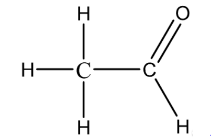

Ethanol ethanal
Stage 2: Oxidation of ethanal to carboxylic acid
USES OF ALKANOIC ACID
1. For making vinegar, which is used in food flavour and preservation
2. It is added to foods and drinks to give sour taste
3. It is used in the production of polymers and plastics
4. It is reacted with bases to make soaps, cosmetics and detergents
5. It is found in aspirin used for pain relieve and reduction of fever
ESTERIFICATION
It is a reversible chemical reaction between carboxylic acid and alcohol in the presence of a strong catalyst to produce ester and water.
Carboxylic acid + Alcohol Ester + Water
(conc. H2SO4)
RCOOH + R’OH RCOOR’ + H20
Carboxylic acid Alcohol Ester water
Example:
1. Acetic acid (CH3COOH) and ethanol (C2H5OH) combine to form ethyl acetate (CH3COOC2H5) and water (H2O)
CH3COOH + C2H5OH CH3COOC2H5 + H2O
2. Acetyl chloride (CH3COCl) and Methanol (CH3OH) react to form methyl acetate (CH3OOCH3) and Hydrochloric acid (HCl)
CH3COCl + CH3OH CH3COOCH3 + HCl
COMPARISM BETWEEN ESTERIFICATION AND NEUTRALIZATION
1. Esterification produces ester and water from chemical reaction between carboxylic acid (organic) and alcohol while Neutralization yields salt and water from chemical reaction between acid and base
2. Esterification is slow and reversible reaction, Neutralization on the other hand is a quick process and usually complete.
3. Esterification requires heat and strong catalyst, Neutralization does not.
Evaluation
1. The functional group in alkanoic acid is
A. – OH B. C = C C. COOH D. – C = O
2. The general formula for carboxylic group is
A. CnH2n + 1COOH B. CnH2n+2 C. CnH2n D. CnH2n+1OH
3. The natural source of Alkanoic acid is
A. sea water B. sugar C. clay sand D. animal fat
4. The reaction between carboxylic acid and alcohol produce
A. salt B. ester C. base D. hydroxide
5. Which Alkanoic acid is found mostly in vinegar?
A. ethanol B. Methanoic acid C. ethanoic acid D. Methyl acetate
6. The common name for Methanoic acid is
A. formic acid B. acetic acid C. butanoic acid D. palmitic acid
7. Which of these carboxylic reactions will produce effervescence effect?
A. Reaction with base B. Reaction with water C. Reaction with alcohol D. Reaction with carbonate
8. Which of these Alkanoic acid processes required catalyst?
A. Neutralization B. Esterification C. Hydrogenation D. Polymerization
9. Lower members of Alkanoic acid are _______ in water
A. insoluble B. partially insoluble C. partially soluble D. completely souble
10. Alkanoic acids are prepared by oxidation of primary _______
A. alcohol B. alkene C. alkane D. alkyne
Theory Questions
1a) Define carboxylic acid
b) If a carboxylic acid as its positional number to be 4, write
i) the molecular formula
ii) the structural formula
iii) the common name
iv) draw its structure
2a) Define: i) Esterification ii) Neutralization
b) Give TWO differences between esterification and neutralization
c) Write esterification reaction between:
i) formic acid and ethanol
ii) Butanol and acetic anhydride